
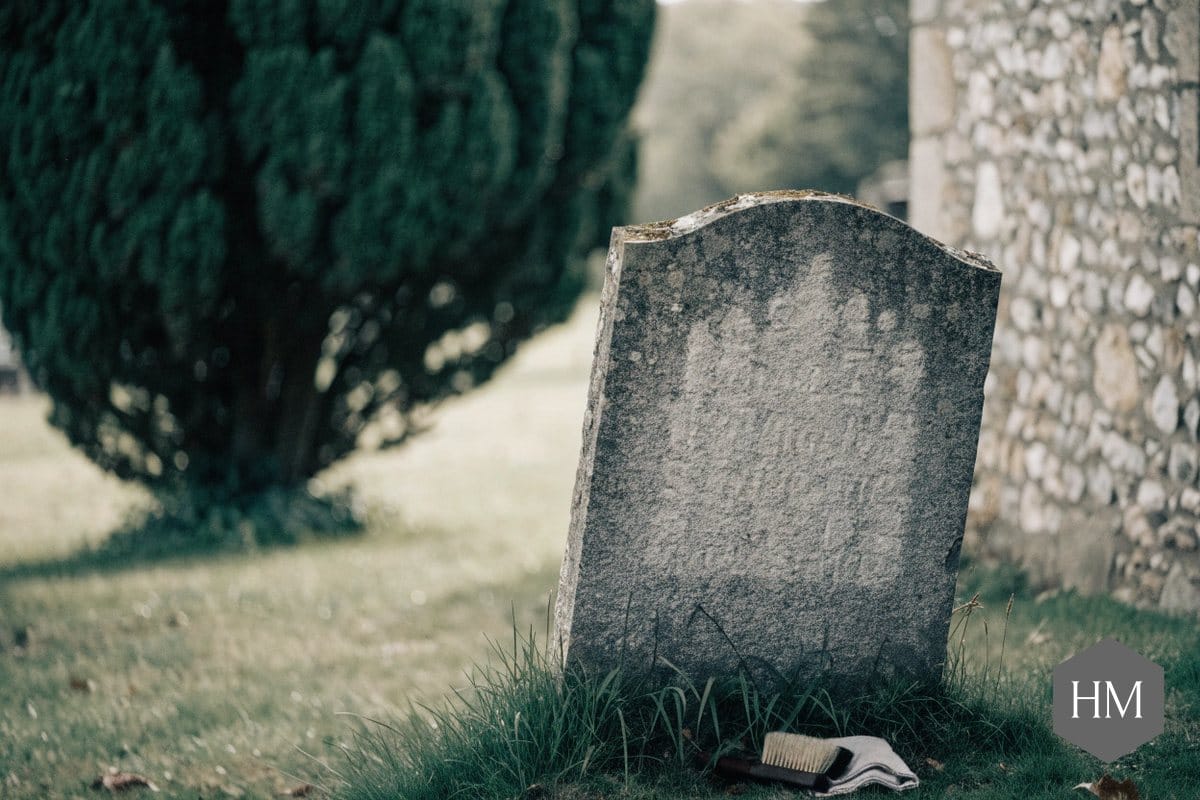
Most headstones can be restored. Faded lettering can be repainted, regilded or recut, a leaning stone can be lifted and refixed on a new foundation, and cracks, chips and staining can usually be repaired. Headstone restoration is normally far less costly than a new memorial, and it keeps the original stone that the family chose.
If you have visited a grave recently and noticed the names are harder to read, or the stone has started to tilt, it can be unsettling. A memorial is meant to stay as it was, and seeing it change can feel like losing a little more of the person it remembers. The good news is that a memorial mason can bring most stones back to a clear, safe and dignified condition.
This guide explains what headstone restoration involves, the main types of work, who can give permission, how long it takes and when a replacement makes more sense than a repair.
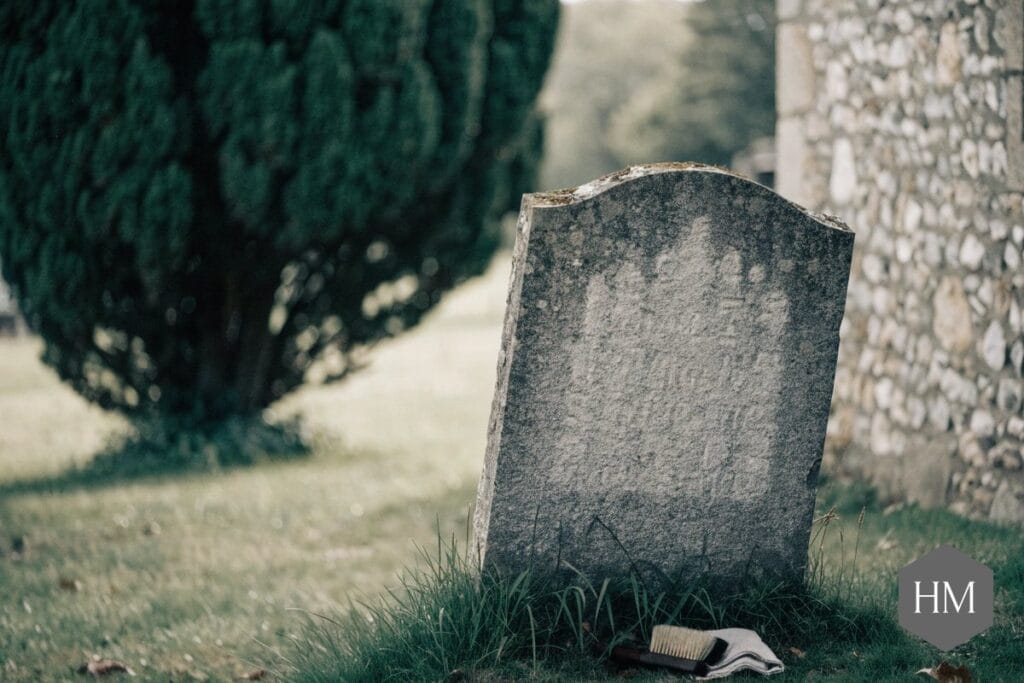
What Headstone Restoration Involves
Restoration is any work that returns an existing memorial to a sound, readable condition. It sits between routine cleaning, which families can often do themselves, and a full replacement. In practice, most restoration jobs fall into one or more of these groups:
- Re-lettering: refreshing faded inscriptions with paint, gold leaf or new cutting.
- Refixing: lifting a loose or leaning headstone, laying a new foundation and fixing it securely.
- Stone repair: mending cracks, chips and broken pieces, or repointing the joints on a kerb set.
- Specialist cleaning: removing lichen, algae, staining and old repairs safely for the stone type.
- Additional inscriptions: adding a name and dates after a further burial, matched to the existing lettering.
If the stone simply looks dirty, our guide to cleaning a headstone safely covers what families can do themselves and what to avoid. Restoration is the step beyond that, when the lettering, the fixing or the stone itself needs a mason's attention.
Signs a Headstone Needs Restoring
Some changes are cosmetic and can wait. Others are safety issues that should be dealt with promptly. These are the signs families most often notice:
- Lettering that has faded, flaked or lost its paint or gilding, so the names are hard to read from a few steps away.
- A headstone leaning forwards or to one side, or moving when touched lightly.
- Gaps opening between the headstone and its base, or between the pieces of a kerb set.
- Hairline cracks, chipped edges or pieces that have broken away.
- Surface flaking or crumbling on softer stones such as sandstone, limestone and older marble.
- A notice or tape from the cemetery saying the memorial has failed a safety inspection.
⚠️ Important: if a headstone moves when touched, do not try to straighten or prop it yourself. A memorial can weigh well over 100kg, and a stone that shifts unexpectedly can cause serious injury. Leave it, tell the cemetery or church, and ask a mason to make it safe.
Restoring Headstone Lettering: Repaint, Regild or Recut
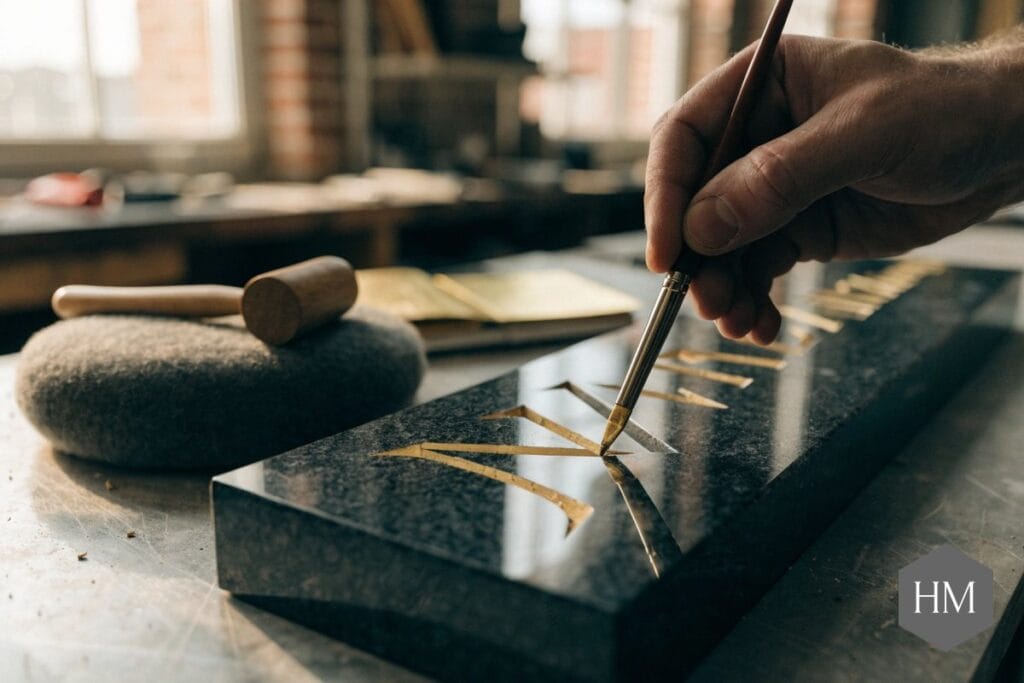
Faded lettering is the most common reason families ask about headstone restoration. There are three main approaches, and the right one depends on the stone, how the letters were originally cut and how long you want the result to last.
Repainting
Incised letters can be cleaned out and repainted with a specialist enamel or signwriting paint. It is the quickest option and is usually done at the graveside. Paint weathers faster than other finishes, especially on stones that face south or sit under trees, so it will need refreshing again in time.
Regilding with gold leaf
Gold leaf is applied by hand into the cut letters over a size, or adhesive. On polished granite it gives a crisp, long-lasting finish, and real gold does not tarnish. Regilding is often done in the workshop, because the stone has to be dry, clean and sheltered for the leaf to bond well.
Recutting
Where letters have worn shallow, as they do on older limestone, sandstone and marble memorials, a mason can recut them by hand or sandblast them deeper. Recutting removes a little more stone each time, so it is not suitable for every memorial, and on a very soft or flaking face the safer choice may be to leave the original letters and add a new tablet.
Raised lead letters, common on older marble memorials, can also be re-fixed or replaced where some have dropped out.
Which lettering finish suits which stone
This table summarises how the options compare. Durability depends heavily on aspect, shade and local air, so treat the guidance as typical rather than guaranteed.
| Method | Best suited to | Where it is done | How long it lasts | Points to know |
|---|---|---|---|---|
| Repainting | Granite, slate and sound marble with clean incised letters | Usually at the grave | The shortest of the three; refreshing every few years is normal | Least disruptive and quickest |
| Regilding | Polished granite and slate | Usually the workshop | Long lasting; gold does not tarnish | Needs a dry, sheltered surface to bond |
| Recutting | Limestone, sandstone and marble with worn, shallow letters | Workshop or in situ | Permanent; the letter itself is renewed | Removes stone; not suitable for flaking faces |
| Re-leading | Older marble with raised lead letters | Workshop | Long lasting | Missing letters can be matched and replaced |
The stone your memorial is made from makes a big difference to what is possible. Our guide to headstone materials explains how granite, marble, slate and limestone each age over time.
Leaning, Loose and Unsafe Headstones
A headstone that leans has usually moved because the ground beneath it has settled, the original foundation has failed or the fixing between the headstone and base has weakened. It is one of the most important restoration jobs, because a stone that falls can injure someone and is often damaged beyond repair in the fall.
How a leaning headstone is refixed
Refixing normally follows the same sequence, whatever the size of the memorial:
- The mason inspects the memorial and confirms what has failed: the ground, the foundation or the fixing.
- Permission is obtained from the cemetery or the church, as for any work on a memorial.
- The headstone is lifted off safely and the old foundation is removed.
- A new foundation is laid and the memorial is refixed using an approved anchoring system, in line with the British Standard for memorials, BS 8415.
- The stone is checked for stability before the site is left tidy.
Leaning is especially common in the first year or two after a burial, as the ground settles. Our article on how soon you can erect a headstone after a burial explains why masons often wait several months before fixing a new memorial.
If the cemetery has flagged your memorial as unsafe
Councils and churches inspect memorials in their burial grounds regularly, often on a five-year cycle, following Ministry of Justice guidance on memorial safety. Inspectors look for cracks and movement and apply firm hand pressure to test stability. A memorial that fails may be cordoned off, supported with a stake and strap or, as a last resort, laid flat.
The burial authority will usually write to the grave owner and give them a period to make the memorial safe, commonly around six weeks, before it acts itself. If you receive a letter like this, a mason can inspect the memorial, confirm what is needed and handle the permit for the repair.
Repairing Cracks, Chips and Damaged Stone
Small chips and cracks can usually be filled, bonded or dressed so they are barely noticeable. Larger breaks can sometimes be pinned and bonded, particularly on granite, which is strong and stable. Weathered limestone and sandstone are more delicate: once the surface has started to flake, a mason will focus on consolidating what remains rather than trying to make it look new.
On kerb sets, the joints between the kerbs, base and headstone are often repointed, and missing chippings replaced. These small jobs make a grave look cared for again and stop water getting into the joints, where winter frost can push them apart.
Restore or Replace? How to Decide
Most families would rather keep the original memorial if they can. Restoration is usually the right answer, but there are times when a new stone, or a new stone alongside the old one, is the better choice.
Restoration usually makes sense when
- The stone itself is sound, even if the lettering has faded
- The memorial leans but is not broken
- Damage is limited to chips, staining or small cracks
- The family wants to keep the original memorial
- You need to add a name and the stone has space
Replacement is worth considering when
- The stone has broken into several pieces
- The face is flaking so badly the letters cannot be recut
- There is no room left for a further inscription
- The memorial no longer meets current regulations
- The cost of repair is close to the cost of a new stone
Where an old stone is too fragile to work on, some families keep it in place and add a small new tablet or plaque with the inscription, subject to permission.
Do You Need Permission to Restore a Headstone?
Usually, yes. Cleaning a stone by hand rarely needs formal approval, but work that involves the lettering, the fixing or the structure of a memorial normally needs permission from whoever manages the burial ground. A reputable mason will apply for this on your behalf. Our guide to headstone permission explains the wider rules.
Council and private cemeteries
In local authority cemeteries, the person who holds the Exclusive Right of Burial for the grave, shown on the grave deed, normally has to authorise any work. The mason then applies to the cemetery office for a permit, and some cemeteries charge a fee. Many councils also require the person doing the work to be a registered memorial fixer.
If the grave owner has died, the right usually needs to be transferred to a family member before work can be authorised. The cemetery office can explain how to do this, and it is often a straightforward form.
Church of England churchyards
In churchyards, permission comes through the parish priest under the diocese's churchyard regulations. In the Diocese of Guildford, for example, the regulations allow the owner of a memorial under 50 years old to repair it, including renewing the lettering, without a faculty, provided the incumbent authorises the repairs in advance. A memorial may be taken away for up to three months for repairs or an approved inscription. Memorials over 50 years old can be repaired in place, but removing them needs a faculty from the diocese.
Rules differ slightly between dioceses, so a mason working in your area will check the local regulations first. Our article on churchyard regulations for headstones explains how the diocesan rules work in more detail.
Adding an Inscription to an Existing Headstone
Adding a name after a second burial is one of the most common reasons a memorial is restored. The mason will usually take the headstone back to the workshop, cut the new lettering to match the existing style, and refresh the original letters at the same time so the whole inscription looks consistent. If cremated remains are being placed in an existing grave, our guide to the interment of ashes explains how this usually works.
Matching older lettering exactly is not always possible, especially where the original was hand cut many years ago, but an experienced mason can come very close. Planning space for a future name when a memorial is first designed makes this much easier, which is one reason husband and wife headstones are often laid out with room left below the first inscription.
If you are choosing new wording at the same time, our collection of epitaphs for headstones may help.
What Affects the Cost of Headstone Restoration
Every memorial is different, so restoration is always quoted individually. These are the factors that make the biggest difference to the price:
| Factor | Why it matters |
|---|---|
| Type of work | Repainting at the grave is quicker than regilding or recutting in the workshop, and refixing involves a new foundation. |
| Number of letters | Re-lettering is largely priced on the number of letters and the method used. |
| Stone type and condition | Soft or flaking stone takes more care, and some repairs are only possible on sound granite. |
| Whether the stone is removed | Taking a headstone to the workshop adds removal, transport and refixing. |
| Permit fees | Most cemeteries and some churches charge a fee for work on a memorial. |
| Size of memorial | Kerb sets and large headstones take more time and handling than a small tablet. |
💡 Tip: when you ask for a quote, send a clear photograph of the whole memorial and a close-up of the lettering, along with the name of the cemetery or church. A mason can usually give an accurate price from that alone.
How long headstone restoration takes
Simple jobs at the graveside, such as repainting or cleaning, can often be done within a few weeks of the go-ahead. Work that needs the stone taken to the workshop, such as regilding, recutting or adding an inscription, takes longer, because a permit has to be granted first and the weather affects when stones can be lifted and refixed. Allowing two to three months from first enquiry is sensible for workshop jobs.
Keeping a Restored Headstone Looking Its Best
Once a memorial has been restored, gentle care keeps it that way for longer. Clear leaves and cut grass from the base, rinse bird droppings and sap away with clean water, and avoid bleach, pressure washers and wire brushes. Families who live some distance away often choose annual grave maintenance, so the memorial is cleaned and checked on a regular schedule. Memorial insurance is also worth considering, as it can cover accidental damage, vandalism and subsidence.
Headstone Restoration from Haven Memorials
Haven Memorials has been restoring and repairing memorials across North Hampshire, Berkshire, west Surrey and Oxfordshire since 1987. Our headstone restoration service covers re-lettering, regilding, refixing leaning stones, repairing damage, repointing kerb sets and adding inscriptions to match the existing design.
We handle the permit application with the cemetery or church, and we will tell you honestly if a stone is better left as it is or would be better replaced.
Browse our work:
- Cemetery memorials and headstones, if a replacement or a second memorial is the better option
- Full length kerb sets, including restoration and repointing of existing kerbs
To ask about restoring a memorial, send us a photograph and a few details and we will come back to you with advice and a quote.
Frequently Asked Questions
Can a faded headstone inscription be restored?
Yes. Faded lettering can usually be repainted, regilded with gold leaf or recut, depending on the stone and how the letters were originally made. See the section on restoring headstone lettering for how the methods compare.
Can a headstone be resurfaced?
Polished granite can often be repolished in the workshop to remove light scratches and dullness, although the lettering then needs recutting or refreshing. Softer stones such as marble and limestone are rarely resurfaced, because removing material can weaken the face and erase the original lettering.
Who is allowed to arrange headstone restoration?
In a council cemetery, it is normally the person who holds the Exclusive Right of Burial for the grave. In a Church of England churchyard, the owner of the memorial, usually the person who commissioned it or their heir, applies through the parish priest. Our section on permission to restore a headstone explains both.
Is it legal to clean a gravestone in the UK?
Gentle hand cleaning of a family memorial is generally accepted, but some burial grounds have their own rules, and work on a stone that belongs to another family needs their consent. Anything beyond cleaning, such as re-lettering or refixing, needs permission from the cemetery or church.
How long does headstone restoration take?
Graveside work such as repainting can often be done within a few weeks. Workshop jobs such as regilding, recutting or adding a name usually take two to three months, allowing for the permit and suitable weather.
What happens if the council says a headstone is unsafe?
The memorial may be staked, cordoned off or laid flat, and the grave owner is usually sent a letter asking for it to be made safe within a set period. A mason can inspect it, apply for the permit and refix it on a new foundation.
What should I do first if I am worried about a family headstone?
Take a few photographs, note the cemetery or church and the grave location, and contact a memorial mason. If the stone is moving, also let the cemetery office or parish know so it can be made safe in the meantime. You can get in touch with Haven Memorials for advice.
Key Takeaways
- Most headstones can be restored, and headstone restoration is usually far less costly than replacing the memorial.
- Faded lettering can be repainted, regilded or recut; the right method depends on the stone and how long you want the result to last.
- A leaning or loose headstone is a safety issue: do not try to straighten it yourself, and ask a mason to refix it on a new foundation.
- Restoration work normally needs permission from the grave owner and the cemetery, or from the parish priest in a churchyard.
- A clear photograph of the memorial and its lettering is usually enough for a mason to give an accurate quote.
Related Articles
- How to clean a headstone: safe cleaning methods by stone type, and what to avoid.
- Choosing the best material for headstones: how granite, marble and other stones age.
- Do you need permission for a headstone?: cemetery and churchyard rules explained.
- Churchyard regulations for headstones: diocese rules across Haven's area.
- How soon can I erect a headstone after a burial?: ground settling and timing.