
Cremation memorials are smaller headstones, tablets, plaques and vases made to mark where ashes are buried, or to give a family somewhere to remember someone after a cremation. Which one you can have depends mostly on where the ashes rest: a churchyard, a cemetery, a crematorium garden or your own garden.
Many families reach this question some months after the funeral. The ashes may be at home, waiting at the crematorium, or already scattered, and there is a growing sense that there should be a place to visit, somewhere to leave flowers on a birthday. That feeling is very common, and there is no deadline on acting on it.
This guide explains the types of memorial for ashes, what each burial setting allows, how to add ashes to an existing family grave, and which stones and inscriptions work best on a smaller memorial, drawing on the published regulations of the dioceses and burial grounds in Hampshire, Surrey and Oxfordshire.
What Are Cremation Memorials?
A cremation memorial is any permanent marker for someone who has been cremated. Because ashes need only a small plot, or none at all, the memorial is usually smaller than a full-size headstone, and the rules about size and placement are often stricter.
They matter more every year. According to the SunLife Cost of Dying Report 2026, 53% of UK funerals are now attended cremations and a further 21% are direct cremations, so around three in every four people are cremated. A direct cremation has no service, and many families who choose one later want a physical memorial to fill that gap.
Ashes keepsakes, such as glass paperweights or pendants containing a small amount of ashes, are a different thing: personal items kept at home rather than a memorial for a grave or garden. If you are still deciding what to do with the ashes themselves, our guide to the interment of cremation ashes covers burial, scattering, dividing ashes and the interment ceremony.
Types of Cremation Memorials
Most memorials for ashes fall into one of seven types. Size ranges below are typical rather than fixed, because every churchyard, cemetery and crematorium sets its own limits.
| Memorial type | What it is | Typical size | Where it is usually allowed |
|---|---|---|---|
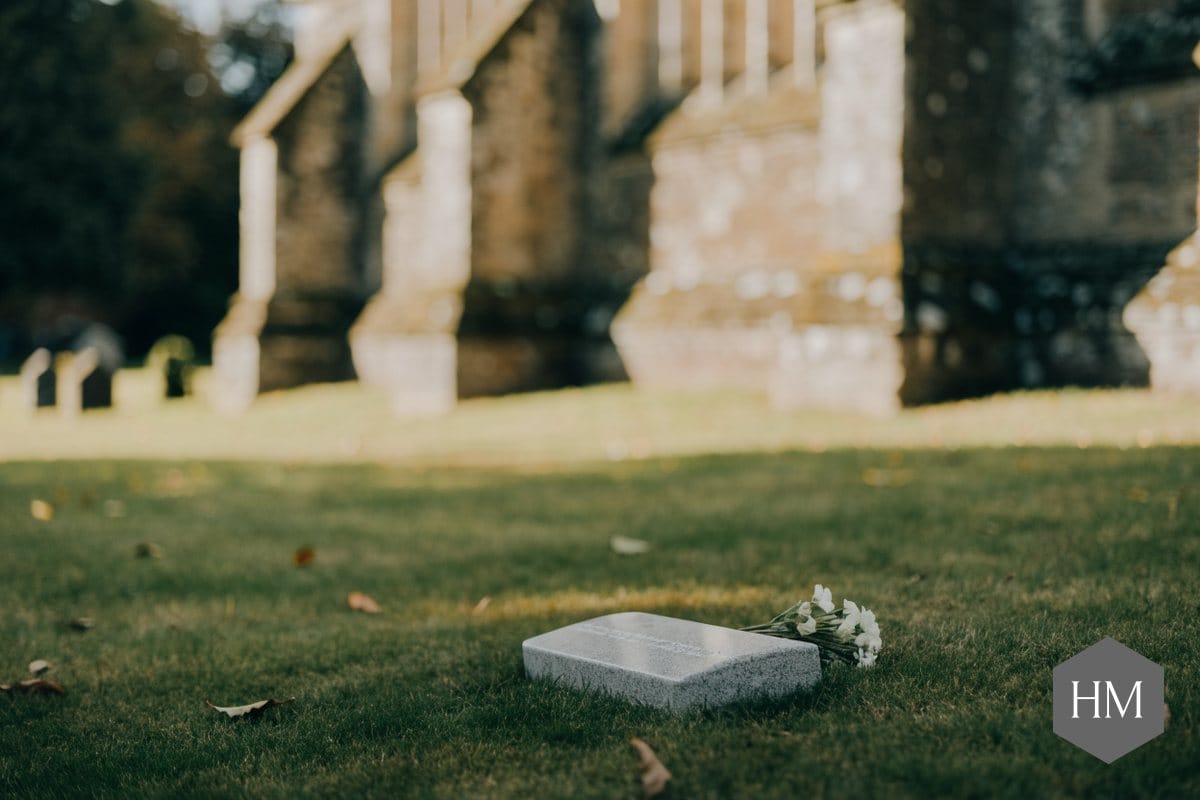
| Flat tablet or ledger | A square or rectangular stone laid flush with the turf, lettered on top | 300mm to 500mm square (12" to 20") | Churchyards, cemetery ashes sections, some crematoria |
| Desk tablet | A sloping tablet on a low base, easy to read without bending down | Around 450mm to 600mm wide | Cemetery ashes plots |
| Small headstone | A scaled-down upright headstone for a cremation plot | Around 450mm to 600mm high | Cemetery ashes plots |
| Book memorial | An open book carved in stone, often with a page for each person | Around 400mm to 600mm wide | Cemeteries; in churchyards usually only by special permission |
| Memorial vase | A stone vase for flowers, lettered on the front | Around 200mm to 300mm | Cemeteries, and beside an existing headstone |
| Plaque | A granite or bronze plaque on a wall, bench or garden feature | Varies by site | Crematorium gardens, private gardens |
| Garden stone or feature | A natural boulder, bird bath or sundial with an inscription | Varies | Your own garden or private land |
Haven Memorials makes flat tablets, desk tablets, small headstones, book memorials and vases. You can see examples in our cremation memorials range, including flat tablets, desk tablets and small headstones with carved roses and poppies.
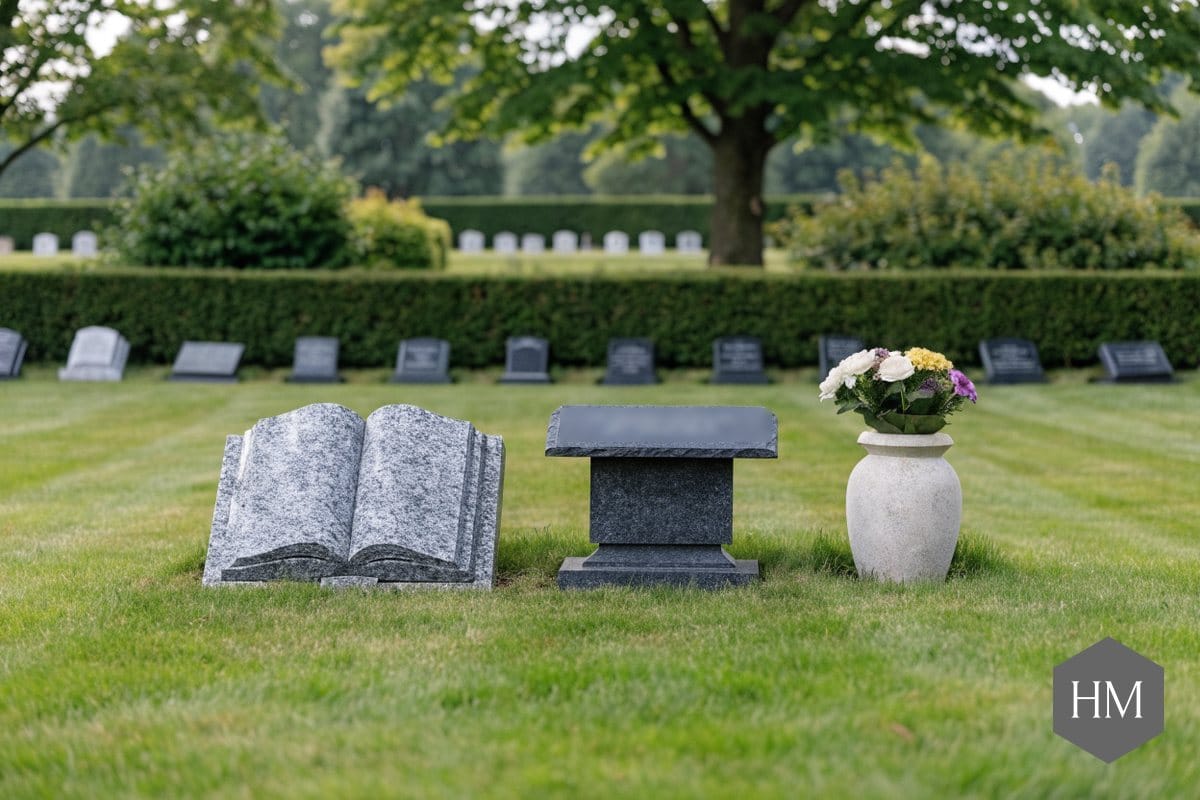
Where the Ashes Rest Decides Which Cremation Memorial You Can Have
This is the single most useful thing to know before choosing a design. The same small granite book might be welcomed in a council cemetery, need special permission in a churchyard, and be impossible at a crematorium that only allows its own memorials. The table below sets out the four settings side by side.
Churchyards
In a Church of England churchyard, parishioners have the same right to have their ashes buried as to be buried in a grave, and any memorial needs the vicar's approval under that diocese's Churchyard Regulations. The rules for ashes are tighter than for headstones, and they vary between dioceses.
In the Diocese of Oxford, a stone marking buried ashes may be no larger than 460mm (18") square and must be laid flush with the ground. It is not permitted at all where the parish has chosen to record ashes only by other means, such as a wall plaque or a book of remembrance. The Diocese of Guildford asks that ashes go into a family grave or an area set aside for them, often called a garden of remembrance, where individual markers are normally unnecessary because each burial is recorded in a book of remembrance instead.
The same stone rules that apply to headstones apply here, so limestone, slate and matt grey granite are usually approved, while polished black granite and marble generally are not. Our guide to churchyard regulations for headstones covers the materials, fees and each of the four dioceses Haven works in.
Council and Private Cemeteries
Most cemeteries have a dedicated section for ashes, with small plots laid out in rows. You buy the Exclusive Right of Burial for the plot, which also gives you the right to place a memorial on it, and the cemetery then charges a permit fee for the memorial itself.
Cemeteries usually allow more choice than churchyards: polished black granite, book designs and small upright headstones are common. Each cemetery still sets its own maximum sizes, so a design should always be checked before it is ordered. Our article on whether you need permission for a headstone explains who applies and what they need to provide.
Crematorium Gardens of Remembrance
Crematoria often offer memorials within their own grounds: plaques in memorial walls, small vaults with a granite tablet, rose bushes with a nameplate, or benches. These are usually leased for a set period rather than bought outright. Guildford Crematorium, for example, offers memorial vaults on leases of 10, 20, 30, 40 or 50 years.
⚠️ Important: Many crematoria supply their own memorials and restrict outside masons. Basingstoke Crematorium's 2026 price list states that some areas are subject to regulations that do not allow external masons to provide a memorial or later work. Ask the crematorium what is permitted before you commission a design, so you do not fall in love with something that cannot be installed.
Your Own Garden or Private Land
You do not need permission to bury ashes or place a memorial in your own garden. On land you do not own, you need the landowner's consent, and a tenant should get the landlord's agreement in writing.
The practical question is what happens if you move. Ashes buried in a garden stay with the property, but a freestanding memorial stone, plaque or bird bath can come with you. Some families place a memorial at home and keep the ashes in a casket nearby for that reason.
Adding Ashes to an Existing Family Grave
Burying ashes in a grave the family already owns is often the simplest choice, and it keeps family members together. It is common when a husband or wife is cremated and their partner is already buried. With the consent of the person who holds the Exclusive Right of Burial, the grave is reopened for a small interment, which is a much simpler process than a full burial.
There are two ways to mark the ashes:
- An additional inscription on the existing headstone. This is usually the preferred option, and in churchyards the Diocese of Guildford asks for it wherever there is space. Depending on the stone, new lettering is cut in the cemetery or the headstone is taken back to the workshop and refixed.
- A small flat stone in front of the headstone. Where there is no room left, Guildford allows a stone of up to 500mm (1ft 8in) square, laid flush with the turf and matching the existing memorial. It can include a flower vase, as long as the top sits level with the stone.
💡 Tip: Before planning an added inscription, check how much clear space is left on the headstone and whether the original lettering style can be matched. A mason can look at a photograph and tell you what will fit. Our guide to husband and wife headstones shows how shared memorials are usually laid out.
Choosing a Stone for a Memorial for Ashes
A flat tablet is walked on, mown around and sits in wet grass all year, so it needs a harder stone than an upright headstone might. Lettering on a flush stone is normally cut into the surface rather than raised, so it cannot be clipped by a mower.
- Granite is the most durable choice and suits every setting, as long as the colour and finish match the rules. Grey matt granite is widely accepted in churchyards; polished black granite is popular in cemeteries.
- Slate takes very fine, crisp lettering and is accepted in most churchyards, which makes it a natural fit for a small tablet.
- Limestone sits beautifully in older churchyards but is softer, so it weathers faster when laid flat.
- Marble is generally not permitted in churchyards and loses its polish outdoors over time, so it is rarely the best choice for a flush tablet.
Our guide to choosing the best material for headstones compares each stone in more detail, including how it ages.
Inscriptions on a Smaller Memorial
A 460mm tablet has room for a name, dates and perhaps one short line, so every word needs to earn its place. Families often find this helpful rather than limiting: a single phrase can say more than a paragraph.
For short lines that fit a small stone, see our collection of short, beautiful words for gravestones, or browse our epitaphs for headstones for longer options that can be shortened. If the memorial is a plaque on a bench or wall, our guide to memorial plaque wording covers the different conventions for those.
What Makes Up the Cost of a Cremation Memorial
Every memorial is priced individually, and the total is made up of more than the stone itself. It helps to know the parts before asking for a quote:
- The memorial: its type and size, and the stone chosen. A flat slate tablet and a carved granite book are very different pieces of work.
- Lettering and carving: usually priced by the letter or by the design, so a longer inscription or a carved motif adds to the total.
- The burial ground's fees: the plot or Exclusive Right of Burial, the interment of the ashes, and a permit for the memorial. These are set by each churchyard, cemetery or crematorium and vary widely, even within the same town.
- Installation: fixing the memorial and, for an added inscription, cutting the new lettering or removing and refixing the headstone.
A memorial mason can give you a full figure once they know where the ashes are and what you have in mind, including the burial ground's own fees.
How Long It Takes
Allow for two stages: approval and making. Co-op Funeralcare quotes 12 to 24 weeks for design and production, and permit approval can add several weeks, sometimes months, depending on the burial ground. An ashes plot needs far less settling time than a full grave, though some cemeteries and churchyards still apply a waiting period. Our article on how soon you can erect a headstone after burial explains the waiting periods in more detail.
Cremation Memorials from Haven Memorials
Haven Memorials designs and makes cremation memorials for churchyards, cemeteries and private gardens across North Hampshire, Berkshire, west Surrey and Oxfordshire. We know the regulations in the Winchester, Oxford, Guildford and Portsmouth dioceses and the local council cemeteries, so we can tell you what will be approved before you choose a design.
Browse our work:
- Cremation memorials: flat tablets, desk tablets and small headstones for ashes plots
- Book memorials, popular for couples and for cemetery ashes sections
- Memorial vases, including vases that can be added in front of an existing headstone
- Churchyard memorials, designed within diocesan guidelines from the start
We handle the permit application, the stonework and the installation, and we can add an inscription to an existing family headstone. Get in touch with our team to talk through the options for your loved one, with no obligation.
Frequently Asked Questions
What affects the cost of a cremation memorial?
The type and size of memorial, the stone, the amount of lettering and carving, and the fees charged by the burial ground. See what makes up the cost above, or ask a mason for a quote for your specific situation.
Do I need permission to put a memorial where ashes are buried?
Yes, in any churchyard, cemetery or crematorium. The vicar approves churchyard memorials under diocesan regulations, and cemeteries and crematoria issue their own permits. The only exception is your own private land.
Can ashes be buried in an existing family grave?
Usually, yes. With the consent of the person who holds the Exclusive Right of Burial, the grave can be reopened for the ashes. The name is then added to the existing headstone, or a small flat stone is laid in front if there is no room. Read more about adding ashes to a grave.
Do you need permission to bury ashes in your garden?
Not if you own the land. If you rent or the land belongs to someone else, you need the owner's permission, ideally in writing. Buried ashes stay with the property if you move, so it helps to plan for that.
What size is a cremation tablet?
Most are between 300mm and 500mm square (12" to 20"). In the Diocese of Oxford the maximum for a churchyard is 460mm (18") square, laid flush with the ground, and cemeteries set their own limits.
Can I use my own memorial mason at a crematorium?
It depends on the crematorium. Some areas of crematorium grounds only accept the crematorium's own memorials, so check before commissioning a design. Churchyards and council cemeteries normally accept any registered mason.
What should I do first if I want a memorial for ashes?
Start by confirming where the ashes are, or will be, buried and who runs that burial ground. That tells you which rules apply. A memorial mason can then check the regulations, suggest designs that will be approved, and handle the application for you.
Key Takeaways
- Cremation memorials range from flat tablets and vases to small headstones, book designs and plaques, each suited to different burial settings.
- Where the ashes are buried decides what is allowed: churchyards are strictest, cemeteries offer more choice, and some crematoria only accept their own memorials.
- In churchyards, ashes stones are usually limited to around 460mm to 500mm square and laid flush with the ground.
- Adding ashes to an existing family grave is often the simplest option, marked with an added inscription or a small stone in front.
- Choose a hard stone such as granite or slate for a flat tablet, with lettering cut into the surface.
- Always check the rules with the burial ground, or ask your mason to, before ordering anything.
Related Articles
- Understanding the interment of cremation ashes: burial, scattering and the interment ceremony
- Churchyard regulations for headstones: materials, sizes and fees across the four dioceses Haven covers
- Do you need permission for a headstone?: who applies and what the burial ground needs
- Choosing the best material for headstones: granite, slate, limestone and marble compared
- Short beautiful words for gravestones: inscriptions that fit a small stone