
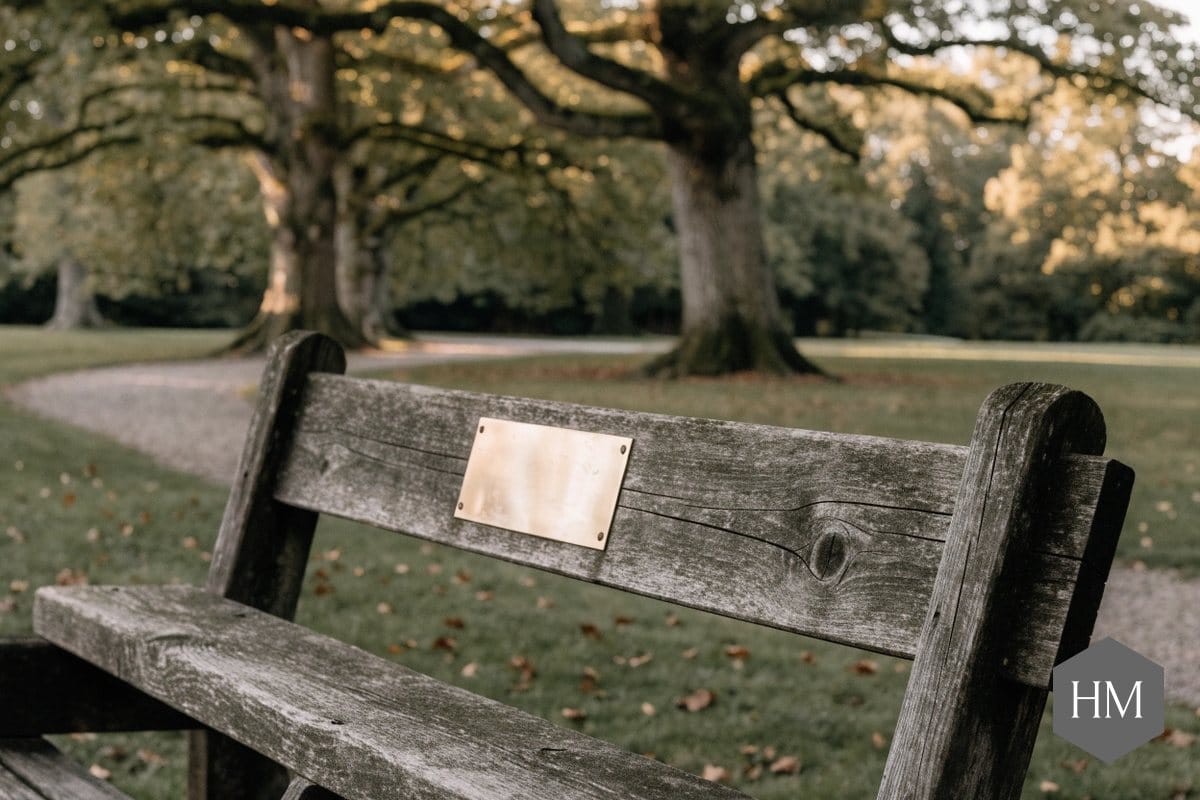
Not every tribute is carved into a headstone. Memorial plaques, remembrance benches and garden memorials give families a way to remember someone without needing a burial plot at all, whether that is a small brass plaque on a bench in a favourite park, a wall-mounted plaque in a crematorium's garden of remembrance, or a stone marker tucked into a corner of the family garden.
These forms of memorial come with their own conventions, space limits and, in some cases, permissions to work around, all of which are quite different from wording a full headstone inscription. This guide covers wording ideas for plaques, benches, garden memorials and cremation memorial plaques, along with the practical details worth knowing before you order one.
What Makes Plaque and Bench Wording Different
A headstone inscription is read by someone standing still at a graveside, often for several minutes. A bench or garden plaque is usually read in passing, by someone sitting down to rest or walking past on their way somewhere else. That changes what works. Shorter, warmer phrases tend to read better than anything too formal or wordy, and the wording often says as much about the place as it does about the person, since many families choose a spot their loved one was fond of.
Space is the other big difference. A standard bench plaque is typically only large enough for two or three short lines, and crematoria set fixed formats for their memorial plaques that leave little room for a lengthy tribute. Getting the wording right within these limits is as much about editing as it is about writing.
Memorial Plaque Wording Ideas
Garden and wall-mounted plaques are usually made from bronze, brass or engraved stone, and can sit almost anywhere: fixed to a wall, set into a paved area, mounted on a post, or laid flat among planting. Because they are viewed up close rather than from a distance, the wording can afford to be a little more personal than a bench dedication.
Short Plaque Inscriptions
For a small plaque, name, dates and a brief phrase is usually enough:
- "In loving memory of [Name], 1948-2024, always in our hearts"
- "[Name], forever in our thoughts"
- "Remembering [Name], who loved this garden"
- "In memory of a wonderful [mother/father/friend]"
Longer Plaque Inscriptions
Where there is more room, a plaque can carry a fuller sentiment, closer to an epitaph than a label:
- "In memory of [Name], who found peace in this place and gave it to everyone who knew her"
- "[Name], 1952-2023, a life well lived, a memory that will never fade"
- "For [Name], who taught us to notice the small things"
If you would rather browse a wider range of phrases and adapt one to fit, our collection of epitaphs and memorial quotes is a good source of inspiration, even though it was written with headstones in mind. Most short epitaphs work just as well on a plaque.
Memorial Bench Wording
A dedication bench is one of the most common ways to remember someone in a park, along a coastal path, or in a favourite spot of countryside. The plaque is usually fixed to the backrest and, because benches are read by strangers as often as by family, the wording tends to be simple and welcoming rather than private.
Traditional Bench Dedications
- "In loving memory of [Name], 1940-2022, who loved this view"
- "Sit a while and remember [Name]"
- "[Name], rest here as she loved to do"
- "In memory of [Name], a familiar face on this path for forty years"
Wording That Reflects the Place
Because a bench sits in a specific place, many families choose wording that ties the person to that spot rather than repeating a generic phrase. Mentioning what they did there, whether that was walking the dog, watching the boats, or simply sitting quietly, tends to mean more to visitors than a formal inscription, and it also explains to strangers why the bench is there.
Practical Space Limits
Standard bench plaques are small, typically around 150mm by 50mm, which is enough for a name, a set of dates and one short line, and rarely more. Councils and park authorities that manage bench dedication schemes usually confirm the exact plaque size and character limit when you apply, so it is worth checking this before settling on the final wording.
Garden Memorial Wording
A memorial in a private garden, whether that is a stone marker, a small statue, a sundial or a planted tree with a plaque at its base, gives families the most freedom of any of these options. There is no cemetery authority or council to satisfy, so the wording can be as personal, informal or unconventional as feels right.
Memorial Stones and Statues
A garden memorial stone can carry more text than a bench plaque, closer to what a small headstone would hold, which makes it a natural choice for a fuller message:
- "[Name], 1945-2025, this garden was her sanctuary, now it holds her memory"
- "In memory of [Name], who planted more than he ever saw grow"
- "For our beloved [Name], always close, always loved"
A Note for Home Gardens
Because a home garden memorial is private, some families prefer wording that only makes sense to them, an in-joke, a nickname, or a line from something the person used to say. There is no rule that a garden memorial has to read like a public inscription, and some of the most meaningful ones do not.
Cremation Memorial Plaque Wording
Many families choose a plaque in a crematorium's garden of remembrance or on a columbarium wall rather than, or alongside, scattering or interring ashes. These plaques follow the format the crematorium sets, which is usually stricter than a private garden memorial but still leaves room for a warm, personal line.
Wall-Mounted and Niche Plaques
These are typically small brass or granite plaques fixed to a wall or niche front, holding name, dates and a short phrase:
- "[Name], 1938-2024, at peace"
- "In loving memory of [Name], reunited with those who went before"
- "Forever remembered, [Name]"
What Crematoria Typically Allow
Most crematoria set a maximum character count and a limited choice of plaque sizes, and some restrict wording to name, dates and a single short line to keep memorial walls and gardens consistent. It is worth requesting the crematorium's own plaque wording guidance before you finalise anything, since it varies from site to site and rewriting after an order has been placed can mean starting the process again.
Permissions, Materials and Costs
Do You Need Permission for a Memorial Bench?
Almost always, yes. Benches on council land, in parks, or along coastal and countryside paths are managed through a dedication scheme, and you will usually need to apply to the relevant council, National Trust site or local authority, agree the wording in advance, and pay an ongoing maintenance fee. Waiting lists for popular spots can run to a year or more, so it is worth enquiring early. A memorial in a private garden needs no such permission at all.
Choosing a Material That Will Weather Well
Outdoor plaques need to withstand years of weather, so bronze and brass are popular choices for their resistance to corrosion, whilst granite plaques suit a garden memorial that sits alongside stone paving or a border. Our team can advise on the best material for the setting you have in mind, whether that is a bench on an exposed coastal path or a sheltered corner of a garden.
Choosing Wording for a Headstone Instead
If you are wording a full headstone rather than a plaque or bench, the considerations are somewhat different, since there is more space to work with and cemetery regulations to bear in mind. Our guide to headstone epitaphs covers wording by length and by relationship in full, including religious verses, examples for husbands, wives, parents and children, and guidance on what else goes on a headstone alongside the inscription.
Not sure which type of memorial fits your situation?
Whether you're picturing a small garden plaque, a bench along a favourite walk, or a crematorium plaque, our team can talk you through materials, sizes and realistic timelines. Get in touch to discuss your memorial.
Frequently Asked Questions
What do you write on a memorial plaque?
Most memorial plaques carry the person's name, their dates, and a short phrase, often no more than one line. Common examples include "In loving memory of [Name]" or a phrase connecting the person to the place, such as "who loved this garden". Longer plaques, particularly stone garden memorials, can hold a fuller sentiment closer to a short epitaph.
How long can a bench plaque inscription be?
Standard bench plaques are small, usually around 150mm by 50mm, which limits the wording to a name, a set of dates and one short line. The exact character limit varies between councils and land managers, so it is worth checking with whoever manages the dedication scheme before finalising the wording.
Do I need permission for a memorial bench?
Yes, in almost all cases. Benches on council land, in parks, or on National Trust and other managed land are placed through a formal dedication scheme, which usually involves an application, agreed wording and an ongoing maintenance contribution. A memorial in a private garden does not require this kind of permission.
What is a good wording for a cremation memorial plaque?
Short, warm phrases work best given the limited space most crematoria allow. "At peace", "forever remembered" and "reunited with those who went before" are common choices, usually paired with the name and dates. Always check the crematorium's own wording guidelines first, since formats and character limits vary between sites.
Can I choose my own wording for a garden memorial?
Yes. A memorial in a private garden is not subject to any cemetery, council or crematorium regulations, so the wording can be as personal or informal as you like, including nicknames, private references, or lines that would not suit a public memorial.
Choosing the Right Memorial for the Setting
Plaques, benches and garden memorials all offer a way to remember someone outside the more formal setting of a cemetery, and each comes with its own conventions for wording, material and permissions. Taking a little time to understand which applies to your situation, whether that is a council dedication scheme, a crematorium's plaque format, or the freedom of a private garden, makes it easier to choose wording that feels right and will still read well in years to come.
At Haven Memorials, our team can talk you through the options for plaques, garden memorials and cremation memorials, and help you find wording that fits both the setting and the person you're remembering. Get in touch with us today to find out more.